Diachronica
Follow a word from its oldest known form to today. Timelines, maps, and etymology notes for language-curious readers.
iPhone and iPad 1.2.4, September 3, 2026. Android 1.2.7 (10207), November 14, 2026.
Google Play beta: Prefer Play Store updates to sideloading? Join the Coolhand beta group first (I’d really appreciate it). I’ll add this app’s opt-in link here when its Play beta is ready.
Installing on Android: Tap Download for Android, open the downloaded file, and allow installs from this source if Android asks. If installation is blocked, tap Advanced, then Install anyway.
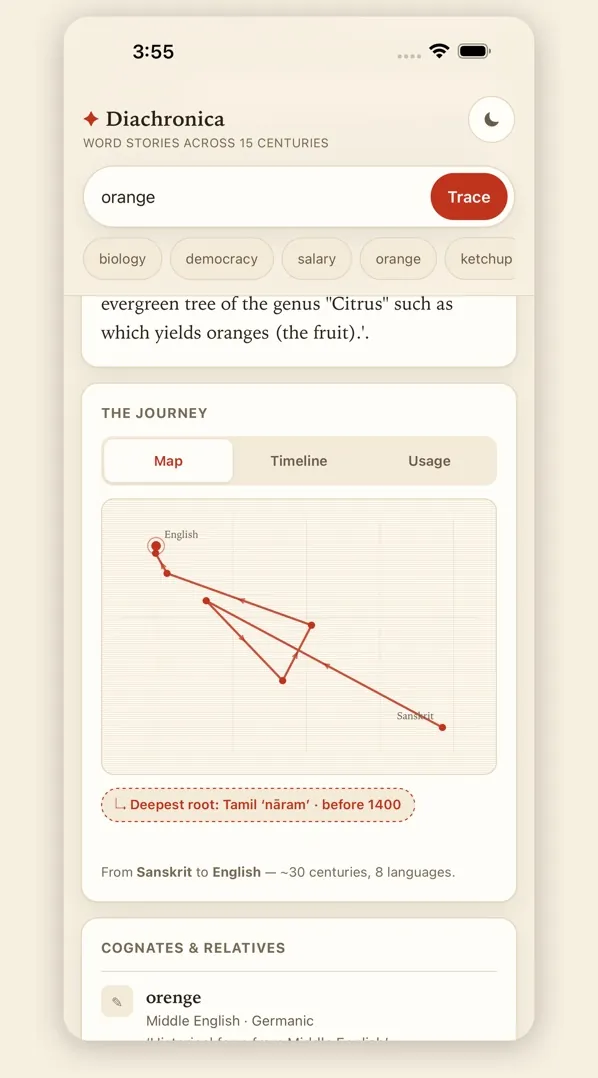
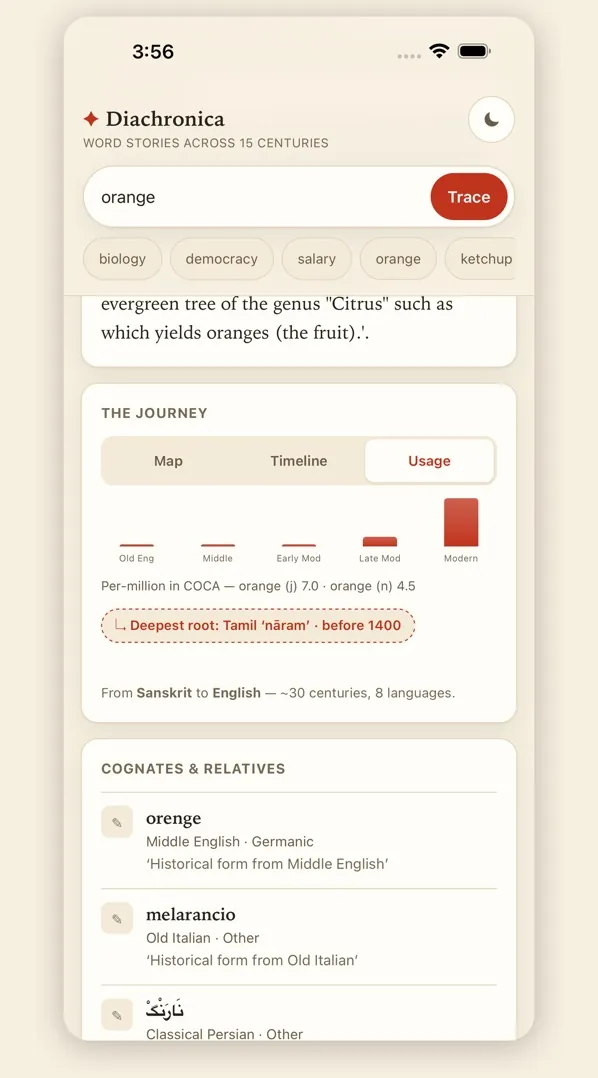
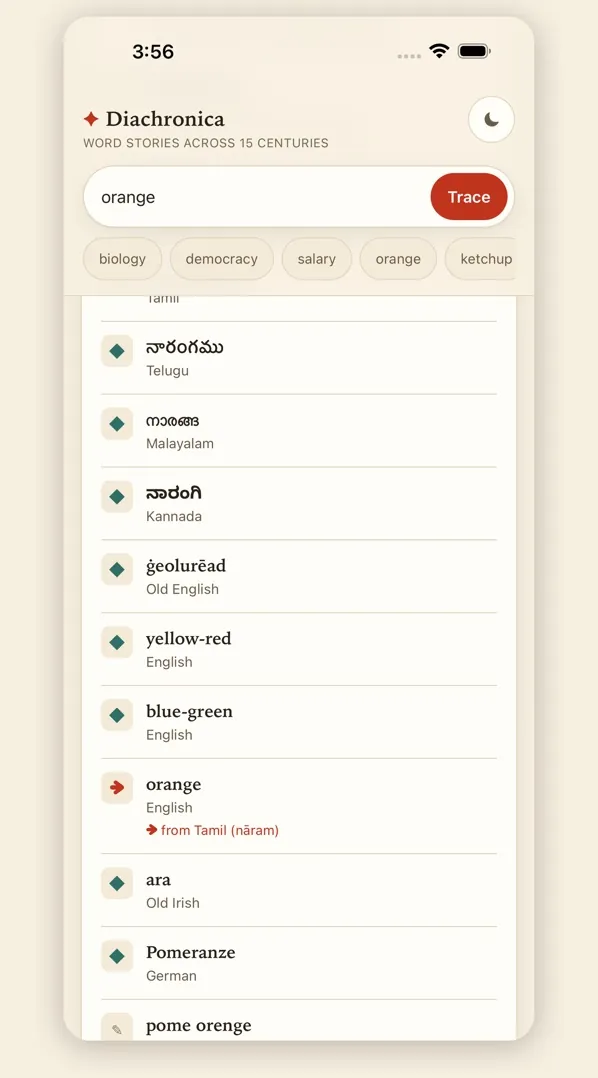
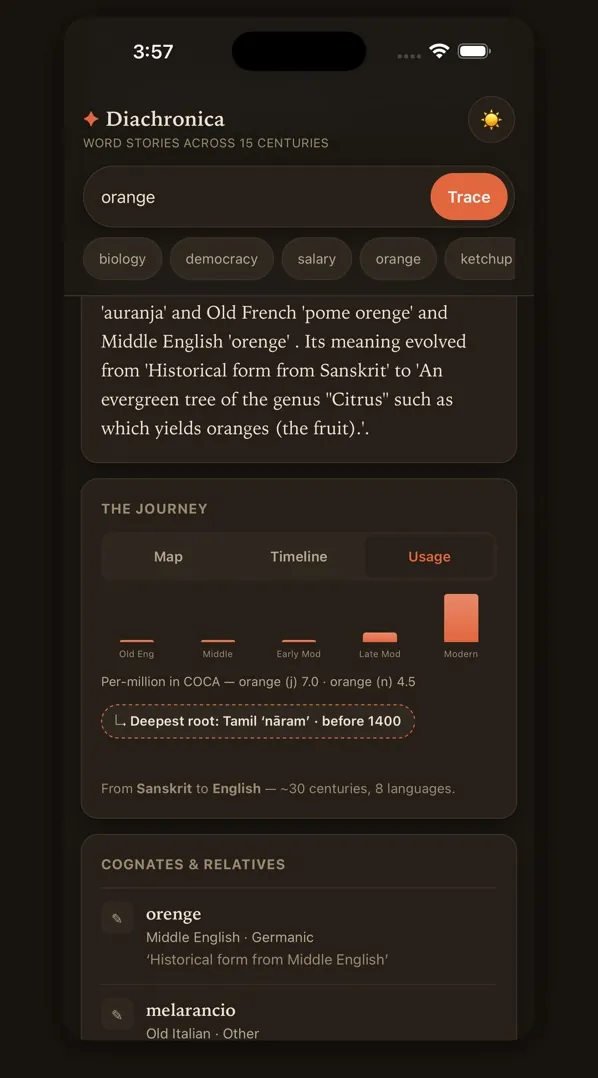
What it does
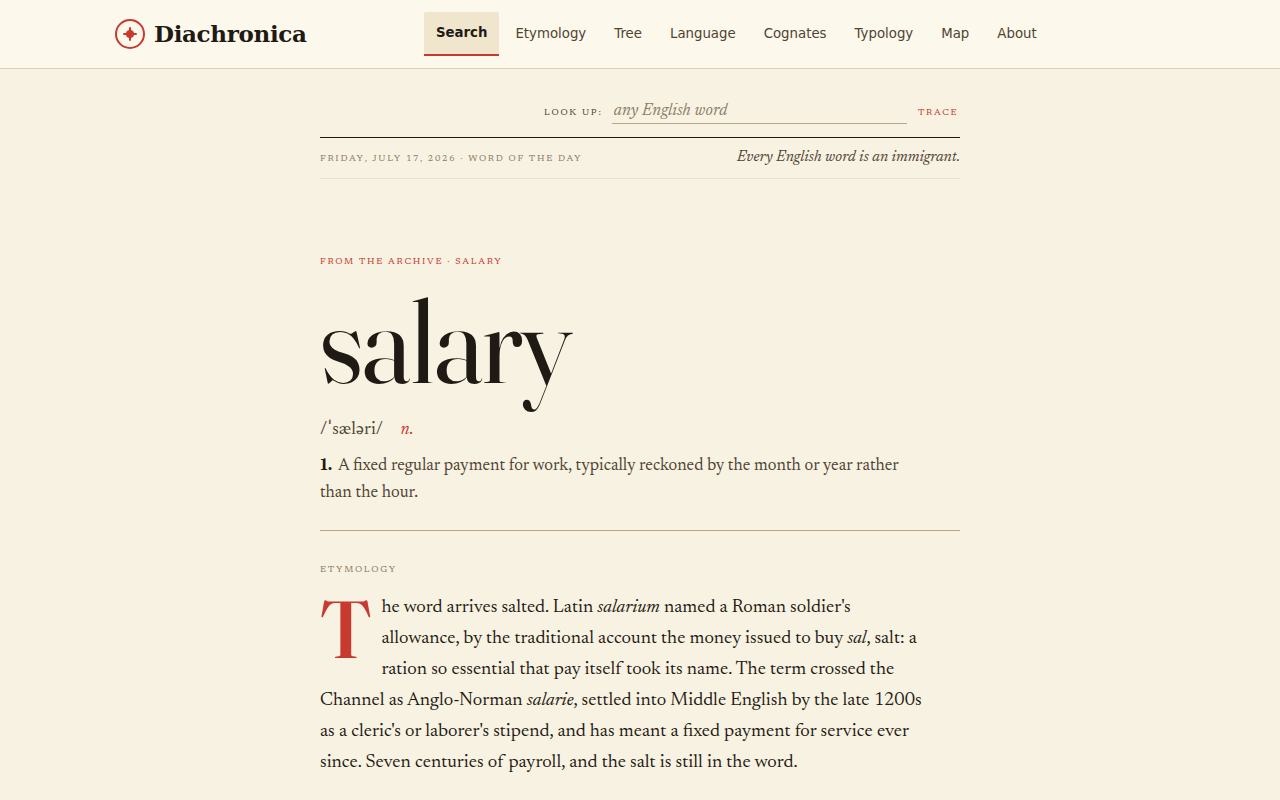
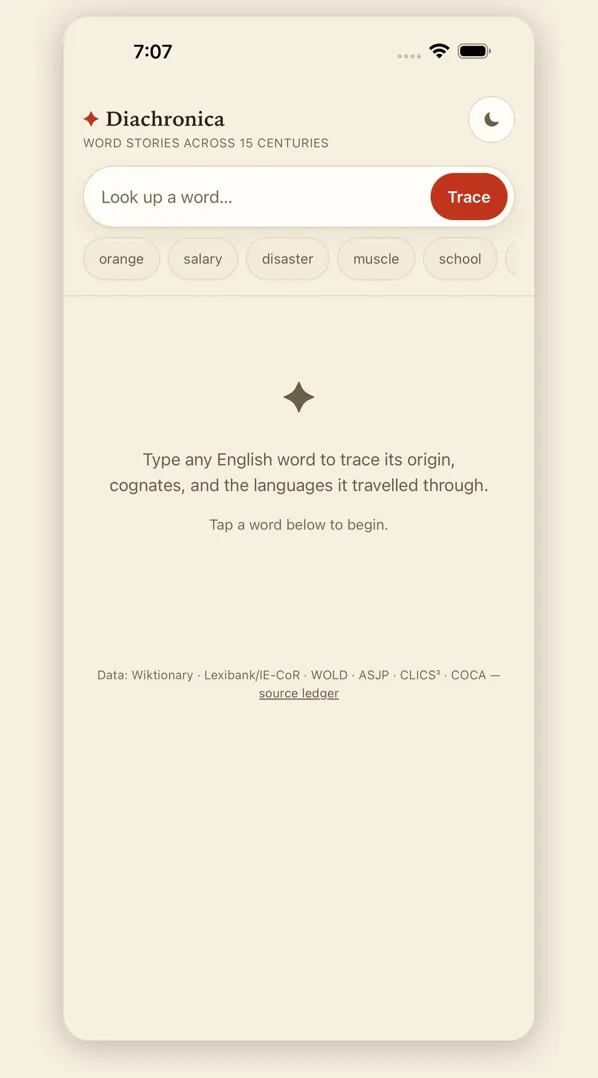
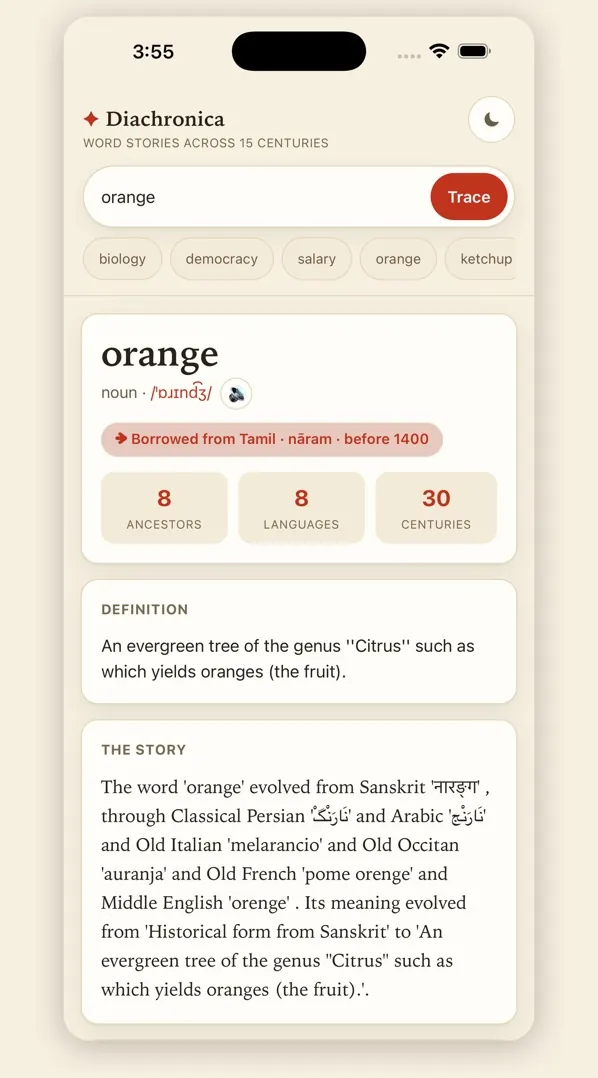
Type an English word, or take the daily word, and Diachronica follows it back through the languages it crossed.
- The story. A definition, the chain of older forms, where English borrowed it from, and how many ancestors, languages and centuries it covers.
- Map, timeline and usage. The languages along the way on a map, each form in order, and how often the word turns up over time in Google Books and COCA, when there’s data.
- Relatives. Cognates in other languages, each marked with its source: WOLD, Lexibank or IE-CoR, an etymology atlas, or Wiktionary.
- Pronunciation. A real recording from Wikimedia Commons when one exists. Never synthetic speech.
- Themes. Parchment by day, Scriptorium at night, or high contrast, with screen reader labels, keyboard controls and reduced motion.
- What differs. The website adds research pages for languages, corpus searches, cognates and comparisons. In the apps, Settings opens Inner Dialogue, a globe of languages and their closest relatives. Android also has a daily-word widget for the home screen.
What you need
- iPhone or iPad with iOS 15 or iPadOS 15 or later.
- Android 7.0 or later.
- A connection, since every lookup goes to diachronica.com. No account.
What it sends
Looking up a word sends that word, and nothing else, to diachronica.com. There’s no account or sign-in, and the service doesn’t log which words you search, though ordinary server logs may note an IP address for a short while. Your theme, last word and tour progress stay on your device. Pressing play on a pronunciation streams the recording from Wikimedia Commons.
The App Store privacy label is Data Not Collected. diachronica.com counts page visits with GoatCounter on my server. More in the privacy policy.